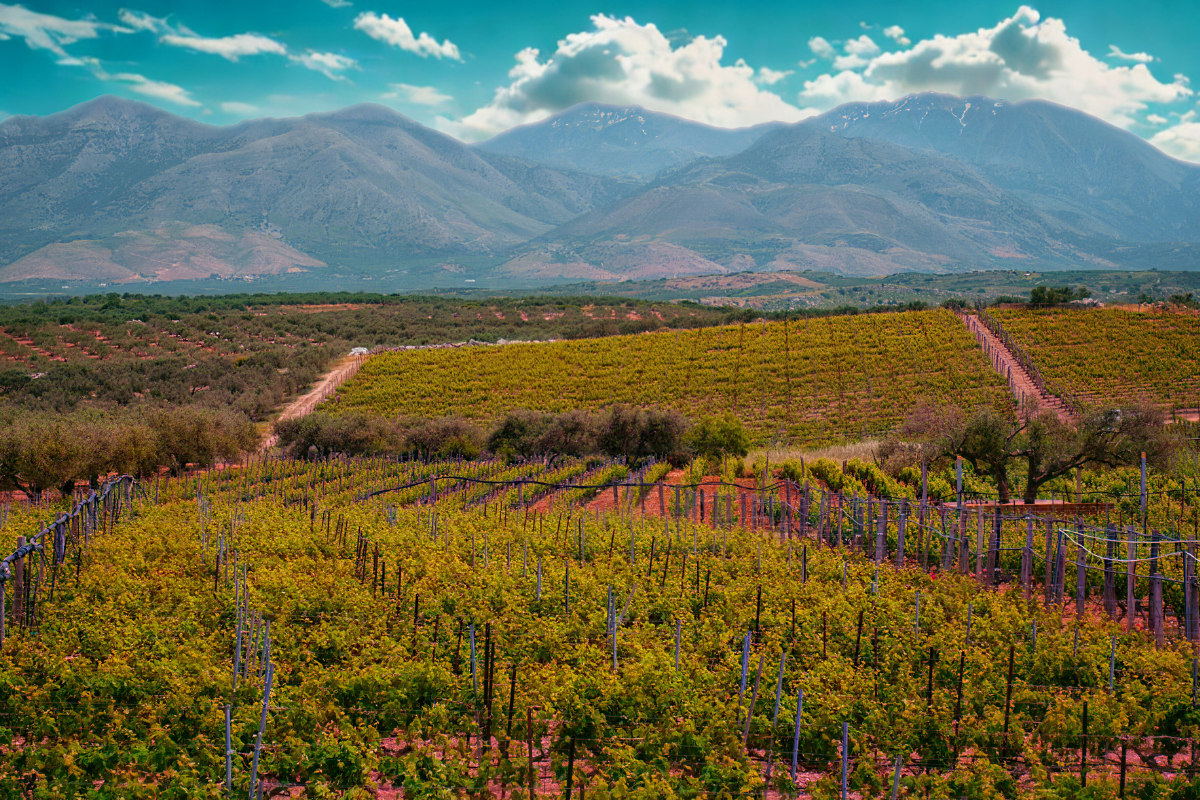
This article explores the evolution of “terroir” from a static geological concept to a dynamic cultural and economic force.By synthesizing insights from Elaine Chukan Brown and Pedro Ballesteros MW, it highlights how human practices and market recognition are essential to defining a territory’s identity and ensuring its long-term economic and environmental sustainability in a changing world.
There was a time when terroir seemed like a monolithic concept: a harmonious blend of soil, climate, and tradition, capable of defining a wine’s identity on its own. Today, however, that concept has entered a phase of profound transformation. It is no longer enough to speak of typicity, nor to rely solely on the “natural vocation” of a territory. Terroir has become a field of forces: cultural, economic, climatic, and social.
This evolution emerges clearly from the reflections shared by Elaine Chukan Brown and Pedro Ballesteros MW, interviewed by ARENI Global, one of the most authoritative think tanks studying phenomena related to the future of wine. Two different but complementary perspectives invite the sector to radically rethink how we understand—and build—contemporary terroir.
Terroir as relationship, not geology
For Elaine Chukan Brown, the word “terroir” today is often imprisoned in technical language that no longer represents the complexity of the relationship between human beings and the land. Her proposal to speak of a “sense of place” stems from the need to recognize that a wine is not the simple translation of the soil, but the result of a practice repeated over time, made of choices, intentions, culture, and cohabitation with a changing environment.
It is not the land that produces identity: it is the way a community lives that land, day after day. And in a context marked by climate change, tradition can no longer be considered immutable: the conditions that defined a “typical” profile no longer exist or will not exist for long.
Terroir is no longer an inheritance, but a responsibility.
The terroir that exists only if someone drinks it
This cultural approach is joined by the vision of Pedro Ballesteros MW, who introduces a surprisingly overlooked element in the Italian debate: the role of the market in the construction of terroir.
No great terroir has ever existed without being supported by a great market. Champagne, Rioja, Bordeaux, Napa: their fame does not stem only from pedoclimatic vocation, but from the historical ability to intercept consumers, cities, infrastructure, trade routes, and international capital.
Terroir, therefore, does not live in the earth: it lives in the encounter between what the territory expresses and what the market desires. A territory can be extraordinary, but if it remains “orphaned” of a market capable of recognizing it, its value remains incomplete.
Today’s Italy: many terroirs, few markets
These two international perspectives force us into an uncomfortable reflection: in Italy, for decades, we have embraced a product-driven approach. We have defended indigenous varieties, rigid production codes, and “typical” organoleptic profiles, often without questioning who would buy—and understand—those wines.
The result? Many of our most beautiful territories are, today, economically fragile. Some could become great terroirs but are not supported by an adequate market. Others produce excellent wines but fail to build value. And several are experiencing climatic transformation without having yet reinvented their narrative.
The truth is that we have built identity without building demand.
Can identity and market coexist? Yes, if we change the questions
The two ARENI Global interviews suggest a clear way out: we do not have to choose between terroir and market. We must rethink terroir by including the market as part of the territory.
Not by adapting taste to fashion, but by choosing:
- Which market can recognize our vocation
- Which narrative can explain it without simplifying it
- Which practices can make it sustainable over time
A wine consistent with place and time is not one that reproduces the past, but one that builds the future.
Towards a new Italian model of terroir
Italy has a unique opportunity: to become the country that redefines terroir not as dogma, but as a process. A process made of:
- Relationship with the landscape
- Continuity of practices
- Social recognition
- Ability to intercept new consumers
- Attention to foreign and local markets
- Cultural and environmental sustainability
- Transparency in values
Because a terroir does not live if it does not live in someone’s imagination. And identity does not exist if there is no economy to support it.
Terroir as a living word
Terroir must not be a museum word, but a living word. A word that includes the land, certainly, but also the people who inhabit it, the changing time, the market that listens, and the communities that support their own production.
In this vision, wine is no longer a product, but a cultural ecosystem. And terroir finally becomes what it has always been: a pact between the land and the world.
Key points
- Terroir is a responsibility and a living practice, not just a geological or climatic inheritance from the past.
- A great terroir requires market recognition and international capital to fully realize its cultural and economic value.
- Italian wine must shift from a product-driven approach to one that actively builds market demand and narrative.
- Sustainability depends on treating wine as a cultural ecosystem that balances environmental changes with modern consumer needs.