The death of Gino Paoli, one of Italy’s most beloved singer-songwriters, prompts a deeper question: what makes a song, or a wine, truly unforgettable? The answer lies in a single word: truth. Just as Paoli’s love songs endure because they mirror real human experience, only wines that tell authentic, unfiltered stories can transcend time.
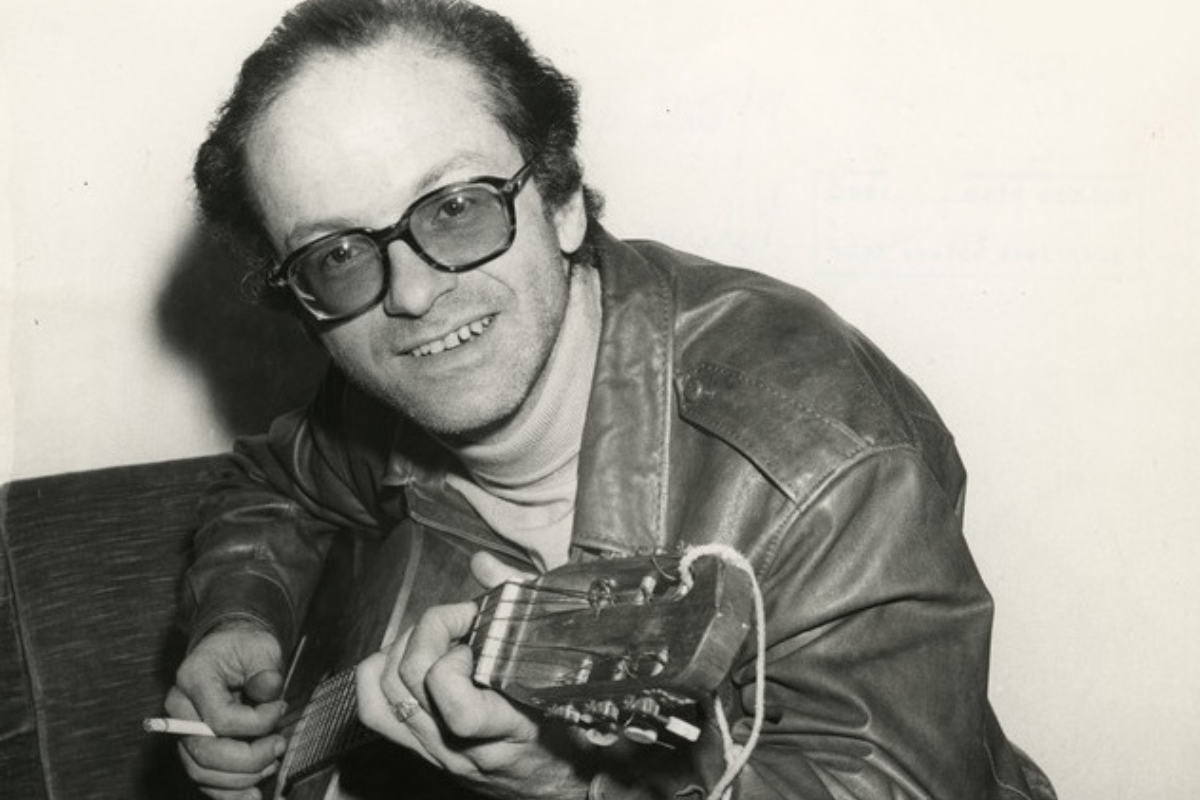
A few days ago, Gino Paoli passed away, one of my favourite singers. Even as a child, understanding nothing about music, I would watch Sanremo on the black-and-white television, fascinated by this man my mother called “ugly” but who seemed completely different from all the others.
He would sit at the piano and not shout but whisper, unthinkable in those years. He was reserved; you could see he hated communicating. And yet he wrote songs that would remain in history.
And then of course there were his incredible love stories, his transgressions that, as I grew into an adult, only deepened my fascination with him.
Gino Paoli belongs to that small group of artists, let’s say it plainly, who die physically but will continue to keep company with present and future generations.
I asked myself why the love sung by Gino Paoli seems so immortal. The answer came to me naturally, because it is true. I challenge anyone not to find a part of themselves, of their own love experiences, in Paoli’s songs.
And so I also asked myself how many wines are “immortal” — what can make a wine capable of defying time, not just and not only in terms of longevity, but capable of imprinting itself on people’s memory.
Certainly, drawing a parallel between a love song and a wine is undoubtedly a bold move. Although alcohol is also an ethereal substance, love is the most important and vital feeling of our earthly experience.
Without seeking far-fetched parallels, I tried to find a common denominator between love and wine: “truth.”
Love told or sung without truth, without a correspondence to something we are capable of living or feeling, becomes, at best, an entertaining banality.
The same applies to those wines that think they are telling a story simply because they are, in fact, a wine, without understanding that without a “true” narrative, they inevitably become a hydroalcoholic beverage, nothing more.
But what true stories can wines tell? It is simple: the stories of those who produce them. But to do so effectively, they must remove every form of filter, every mannerism, otherwise the inevitable risk is that of merely performing a role.
How many singers play a part, and how many wines do the same? A great many, we might say the majority. And indeed, most of them are forgotten within a short time, leaving no mark.
Attention! This does not mean that to be a “memorable” wine you must be a so-called fine wine, a prestigious wine. There are wines that can imprint themselves on anyone’s memory through a story, through an experience that fixes itself in our minds, thanks in part to an extraordinary evocative power that is in wine’s very DNA.
A characteristic I would call genetic to wine, yet one that is used very little by the majority of companies, and also by the many who work in wine communication.
But there is, in my opinion, a very simple reason for this difficulty in going “beyond the glass”: it means stepping out into the open, showing our fragilities, in short, showing exactly who we are, without pretence.
Is there anyone, for example, among today’s wine producers, at a time so complex and revolutionary, willing to open up to the public and share their fears and concerns?
If we think of how many songs of “desperate” but true loves Gino wrote, is it perhaps too exaggerated or naive to imagine that a story of difficulty in wine could finally be a sincere and authentic way to communicate this extraordinary product?
One of the songs I love most by Gino Paoli is “Vivere Ancora”
Vivere ancora soltanto per un’ora
E per un’ora averti tra le braccia
E far sparire per sempre dal tuo viso
Ogni incertezza che ti tormenta ancora
Vivere ancora soltanto per un’ora
E per un’ora vedere sul tuo viso
Tutto l’amore che ti ho saputo dare
E la mia vita, che ora è solo tua
I have been fortunate enough to meet women and men of wine who have been able to give love through their wines, but above all through their stories, where successes and failures have never been omitted, as in that extraordinary game that is life… to be lived again, even if only for an hour.
Key points
- Gino Paoli endures because his love songs reflect authentic, lived human emotions.
- Memorable wines, like timeless songs, must tell true stories, not merely perform them.
- Most wines and artists are forgotten because they lack genuine, unfiltered storytelling.
- A wine’s evocative power is a genetic trait, but it is rarely used effectively.
- Vulnerability and honesty, in music and in wine, are what make both truly immortal.