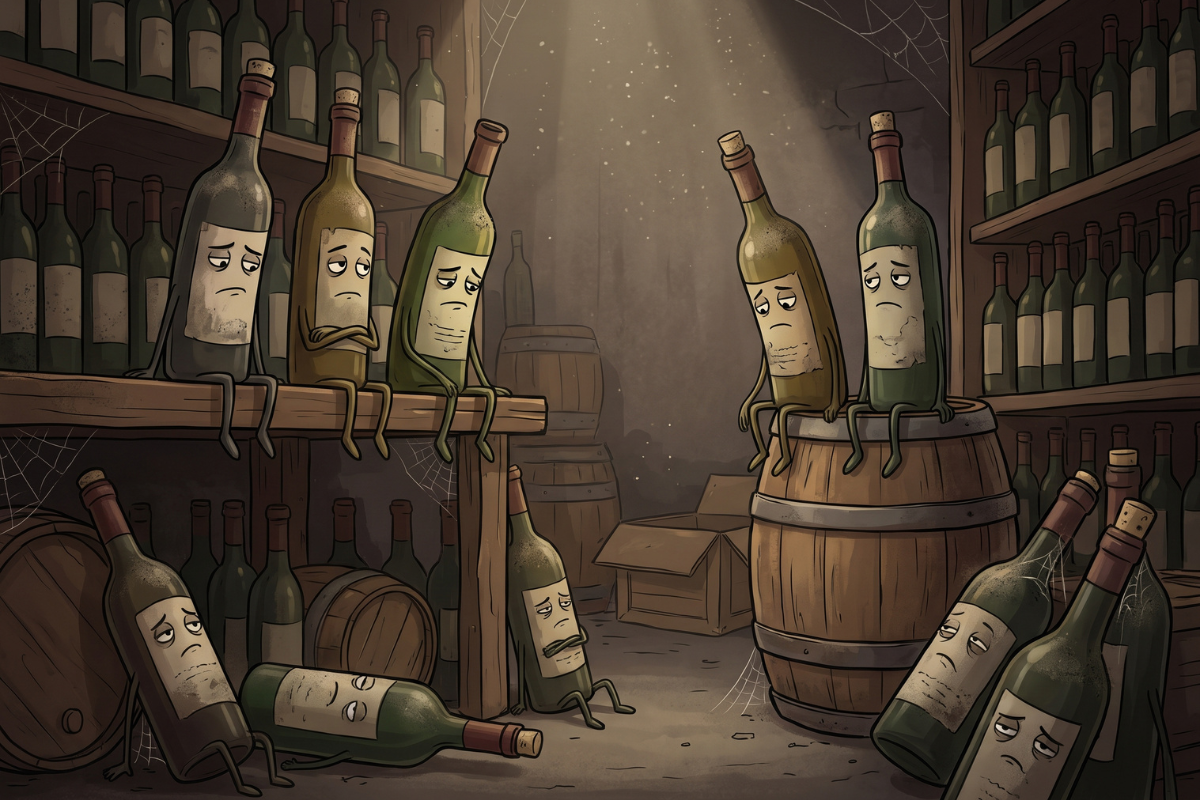
The well-known Italian dictionary Treccani defines relevance as the character or quality of what is relevant, that is, of a fact, an event, a concept or a datum that possesses notable importance, weight, value or pertinence with respect to a specific context or purpose.
But Treccani also defines relevance in economics and marketing as the factor that measures the degree to which a product, a service or a brand responds to the real needs and desires of the consumer, distinguishing itself from the competition. In light of these definitions I wondered how much non-relevant wine we have in the over 47 million hectoliters in stock right now in Italian cellars. According to the Cantina Italia report of the ICQRF updated to October 31, 2026, the overall stock is 47,692,577 hectoliters of wine, over 3.2 million more compared to the same date in 2025, which means an increase of 7.2 percent.
No one can have a precise figure but I will hazard a guess, a lot, too much. I have already written other times about how often it happens to me, going around fairs and events, to taste wines for which you wonder which consumers would be interested in products so lacking in relevance, with little personality, anonymous. And these evaluations of mine find confirmation not only from many professionals, almost all much more competent than me in so-called wine criticism, but also from many friends who are wine enthusiasts.
For this reason we cannot limit ourselves, in the analysis of the current drop in consumption, to blaming consumers for their generic disaffection towards wine. In an era of such profound transformations I find it absolutely legitimate that there are consumers looking for more interesting, more recognizable, precisely more relevant products. We have all become more selective and this is not only for economic reasons but also because we are overwhelmed by proposals and we look for something that represents us more, in which to find meaning in the investment.
I know it is impossible but in phases like these without a bit of healthy utopia you do not get far. I would like wine critics and guides to do a sort of tasting in reverse, and instead of seeking excellence, to identify irrelevance.Obviously, it would not be a matter of creating guides on wines without relevance, but of creating reports that would certainly not be published, to give to companies, perhaps with the contribution of the protection consortia, to make them honestly understand the state of the art of their productions and perhaps suggestions for their improvement.
Of course someone might object that there is a lot of subjectivity in wine judgments. But allow me to say that even this is not entirely true. Subjectivity comes into play regarding the preference of one style over another, but on the front of the personality and recognizability of a wine, judgments are largely objective. In short, from my point of view, if we do not have the courage to look inside ourselves before only observing the outside, we will never know where the real motivations for the current difficulties and the drop in wine consumption of this era lie.
But this would also be precious, very useful for building the wine offer of today and the near future. If you think about it carefully we should do something not so different from what was done in the mid-80s, in particular due to the dramatic methanol scandal, when the entire wine sector had to profoundly rethink its offer model. Then it was 23 deaths and 153 poisoned people that dramatically awakened our sector. Today fortunately we do not run such a risk because our sector has grown extraordinarily from a qualitative point of view.
But it is equally true that the current consumption crisis is calling out loudly to our entire sector, and I could say the whole wine supply chain, for a much deeper and more honest analysis of the qualitative state of its offer and the relevance of our wine production. An unofficial appeal but one that arrives strongly especially to those denominations that today, and some to tell the truth for a long time, struggle enormously to find outlets on the market. But it also reaches many denominations that today attribute their difficulties only to market dynamics and generic consumption preferences.
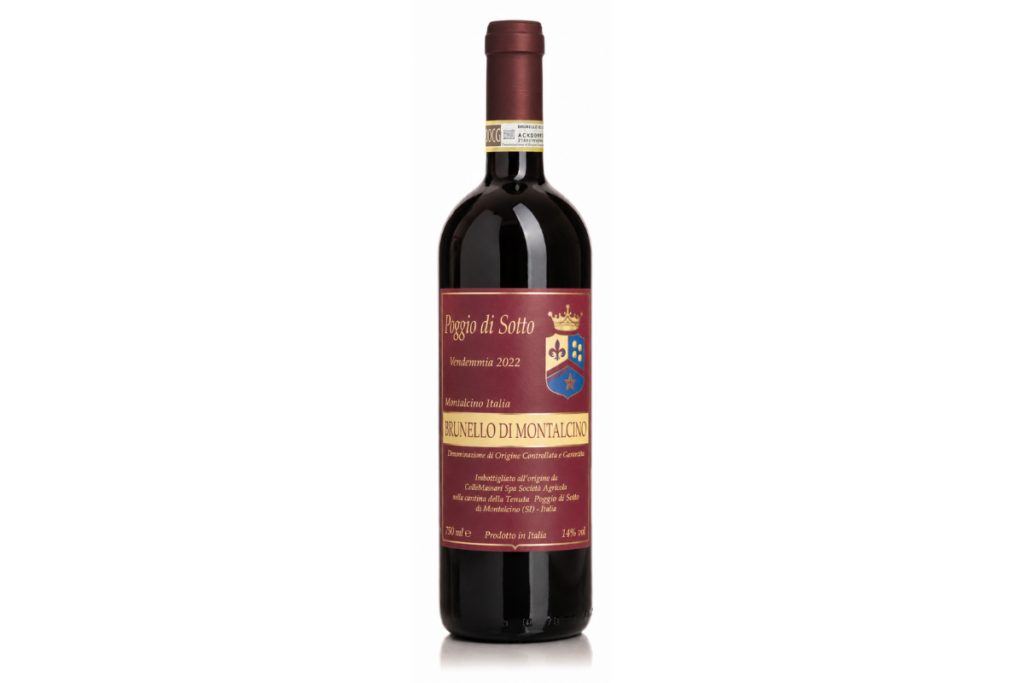
A useful example in this latter direction is the much-cited crisis of red wines. People keep saying that the problem is that red wines are less liked today, without ever seriously analyzing which types of reds struggle the most and above all understanding which companies within the red denominations are in greatest difficulty. It is not true, in fact, just to give an example, that all companies producing Amarone della Valpolicella, Chianti Classico, Brunello di Montalcino, Barolo are in decline. The situation, certainly generally not easy, nevertheless highlights the classic leopard-spot dynamic.
And so it becomes crucial to understand the reasons for success, stability and difficulties, avoiding limiting oneself to the dangerous alibi of everyone is doing badly anyway. Without forgetting the catchphrase of recent years about light wine which is constantly contradicted by the success of wines even with significant alcohol content but extraordinary drinkability. This last note also makes us understand how our sector has been sitting for too long on clichés that are reassuring in some respects but are increasingly turning into the most dangerous ballast for our sector.
Key Points
- Irrelevant wine production is a major cause of the current market surplus and declining sales.
- Honest self-evaluation by producers is essential to understand the lack of market appeal.
- Consumer selectivity stems from a desire for recognizable and meaningful products rather than generic options.
- Market dynamics show a leopard-spot pattern where quality and identity outshine general category crises.