This analysis explores the potential for the wine industry to transcend technical storytelling by adopting the “myth-based” model of Boca Juniors’ La Bombonera stadium. By shifting focus from product specifications to shared identity and emotional resonance, wine can move beyond niche expertise to become a universal symbol of belonging and human struggle for new generations.
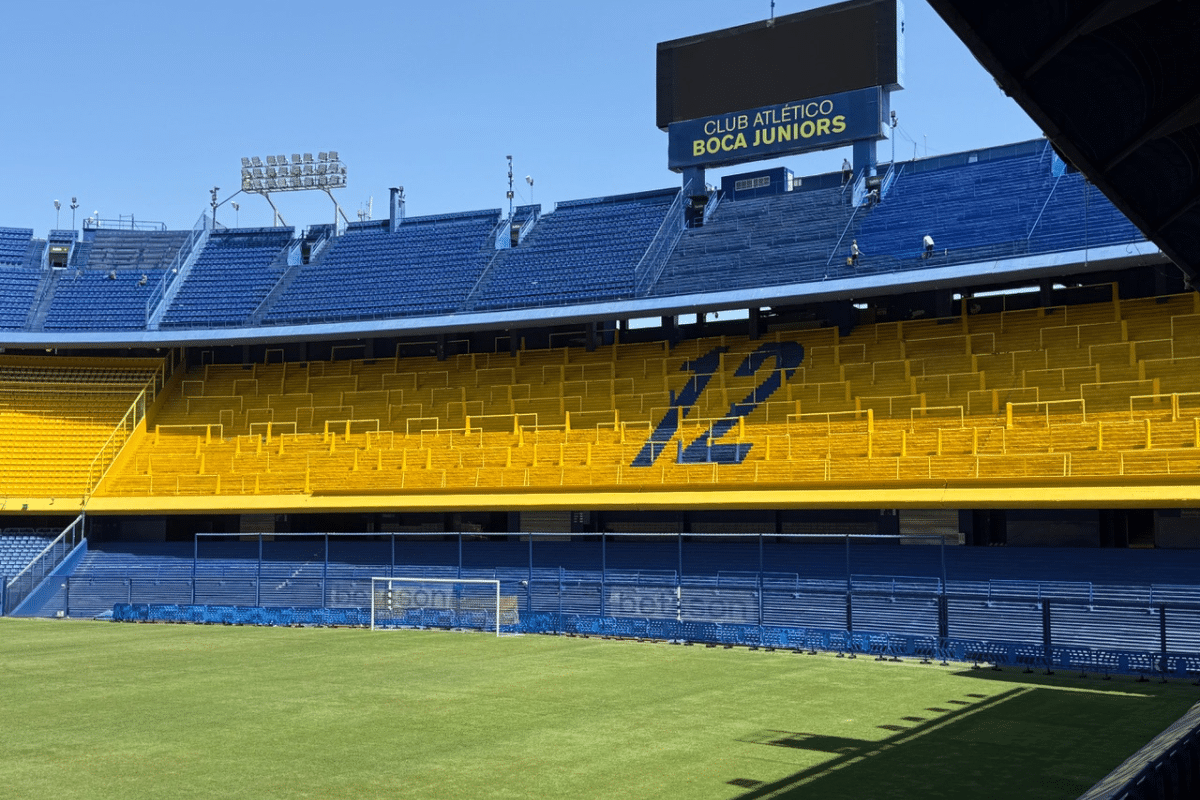
Our first 2026 Wine Tour in Argentina led us to visit extraordinary wineries, extreme landscapes, and territories that powerfully narrate their own identity. However, the most powerful inspiration didn’t come from a vineyard or a barrel cellar, but from a place that seemingly has nothing to do with wine: the Boca Juniors stadium. This iconic venue serves as a masterclass in how a physical space can transcend its primary function to become a global pilgrimage site for identity.
La Bombonera, the popular name for the Alberto J. Armando Stadium—nicknamed for its shape resembling a box of chocolates—is visited daily by thousands of people. Tourists from all over the world enter this space as if they were entering a museum. Yet, it is not the Louvre; it doesn’t house universal pictorial masterpieces or works by celebrated artists found in history books. Despite this, the crowds persist, drawn by something far deeper than the physical architecture or the sport itself.
The answer does not lie in football as a product, but in football as a myth. When visiting the stadium’s museum and watching the immersive video in the internal theater, it becomes clear that La Bombonera doesn’t celebrate matches, trophies, or statistics; it celebrates a faith, a collective hope, and a sense of belonging that transcends sporting results. It is a narrative of a neighborhood, a working class, and a promise of redemption that resonates globally.
Boca Juniors is not simply a team; it is a social, cultural, and emotional symbol. Those who enter the Bombonera don’t go there to “get informed”—they go to recognize themselves and feel part of something larger than themselves.This realization prompts an inevitable question for our industry: is it possible for wine to build a myth of this magnitude, or are we destined to remain confined to the glass?
Wine possesses history, territory, culture, sacrifice, and beauty. Yet, in most cases, when it tries to tell its story, wine remains a prisoner of technical or celebratory narration: grape varieties, altitudes, aging, and scores. While these details are necessary, they are not sufficient to build a myth. A myth is not born from the excellence of the product, but from a shared narrative capable of touching universal emotional chords.
Argentine football is not just football; it is redemption, belonging, and visceral passion. In contrast, wine too often speaks only to those who already know how to listen. Consequently, wine museums, with rare exceptions, become interesting places for enthusiasts and scholars but are rarely crowded or perceived as essential. They lack the “sacred” pull that turns a simple visit into a transformative life experience for the casual visitor.
The question of whether a “Wine Bombonera” is possible is particularly relevant today, as discussions circulate about creating a wine museum in a former Eataly location in Verona. However, the real question is not where to build it, but how to imagine it so it avoids becoming another static display. A Wine Bombonera cannot be a place that displays bottles as relics or focuses solely on teaching people how to taste.
It must be a place that stages a myth. The myth of wine is not the wine itself, but what it represents: the relationship with time, the struggle with nature, risk, waiting, memory, and the promise of future emotion. To avoid becoming another self-referential space, we need a universal story where anyone can find themselves, a central conflict like man against nature, and a sense of ritual that feels physical.
La Bombonera teaches us that “high” art isn’t required to create mass attraction; what is needed is a living, shared, and recognizable myth. If wine truly wants to speak to new generations, it must stop presenting itself as a product of excellence and start telling its story as an emotional promise. Wine has everything it needs to become a myth, but a myth cannot be explained—it must be carefully constructed.
Key points
- The wine industry must shift from technical descriptions to creating a shared emotional myth that inspires deep belonging.
- La Bombonera succeeds because it celebrates identity and collective faith rather than just sports statistics or trophies.
- Current wine narratives are often too technical, speaking only to experts instead of engaging universal human emotions.
- A true “Wine Museum” should function as a sacred temple, focusing on the human struggle against nature.
- To attract younger generations, wine needs to be presented as an emotional promise rather than just an excellent product.