To combat the digital distraction of modern tourists, wine estates must revolutionize their hospitality strategies. Long monologues are no longer effective. Instead, wineries should adopt dynamic formats, alternating brief storytelling with sensory interactions. Engaging visitors across all ages requires immediate hooks, continuous visual stimuli, and an active discovery approach.
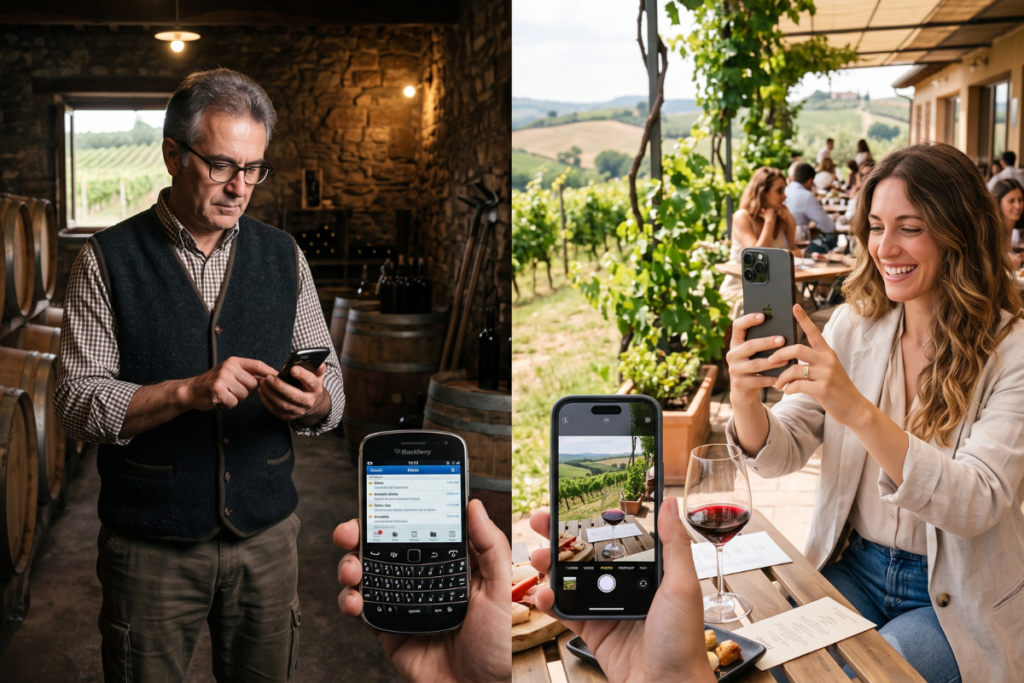
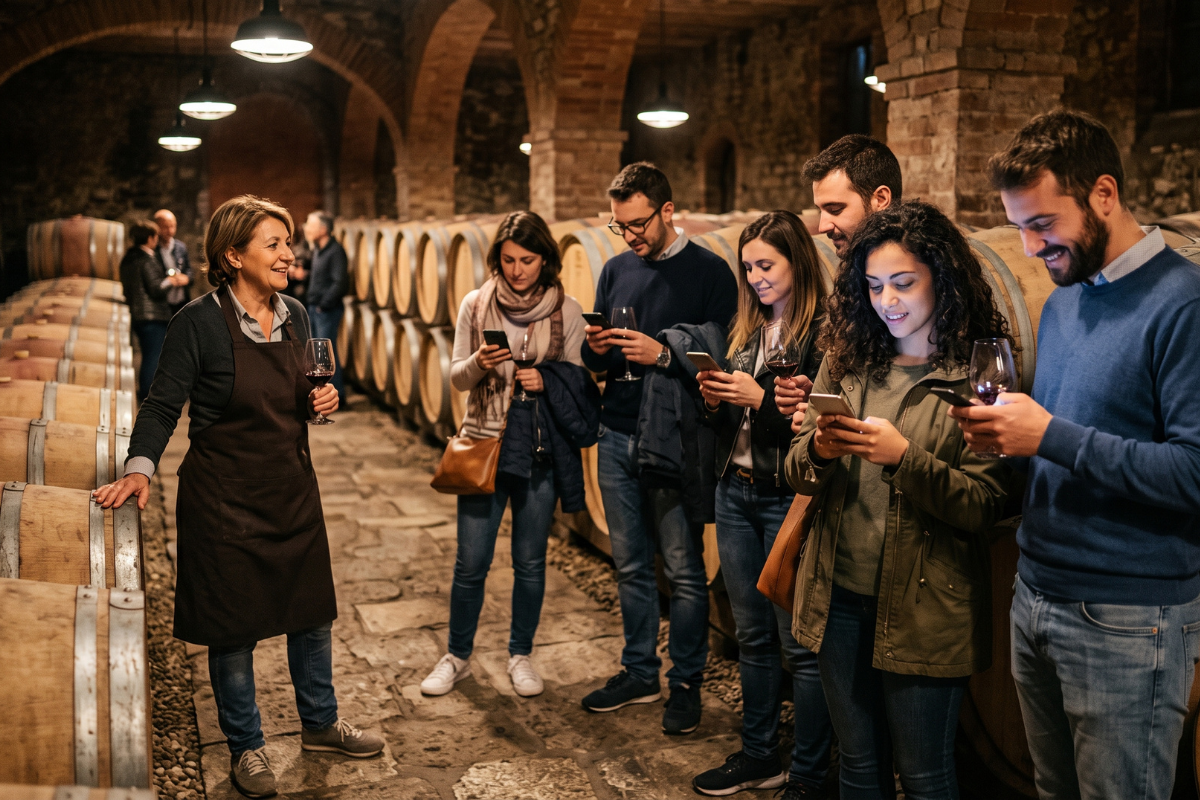
In my daily consultations in Italian wineries, I clash with an unequivocal reality: tourists arrive with a mind highly stimulated by frantic digital rhythms. I observe faces illuminated by smartphones while guides recite endless scripts.This disconnection requires us to completely rethink winery hospitality with extreme pragmatism.
Consumption: the new rules of cognitive engagement
The attention spans of the contemporary audience have drastically reduced. The new pact of attention imposes ruthless and unappealable timings: we have just 3 seconds to arouse interest, 30 to reassure the guest about the value of the time spent and 3 minutes to create real involvement. Agricultural companies must commit to continuously generating new visual and sensory stimuli to maintain high concentration.
It becomes essential, in the daily practice of hospitality, to time one’s welcome speeches to radically eliminate verbose preambles. It is much more effective to immediately offer a glass upon arrival or show an architectural detail of great impact, hooking the interest before the visitor’s mind wanders elsewhere.
Young people and adults: the transversality of distraction
Considering distraction exclusively for young people represents a great misunderstanding in our sector. It is clear that adults also consume entire series on Netflix and quickly get used to the rapid gratification of platforms like TikTok.The real competitor of wineries today groups the entire digital entertainment ecosystem, capable of accustoming the human brain to receiving continuous and very fast rewards.
To respond to this colossal challenge, I always suggest that companies insert elements of active discovery suitable for all ages. Inviting guests to guess a perfume blindly, or to touch the textures of the earth in the vineyard with their hands, allows them to be transformed from passive listeners to dynamic and enthusiastic explorers. Today’s visitors demand fluidity, rhythm and constant interaction.
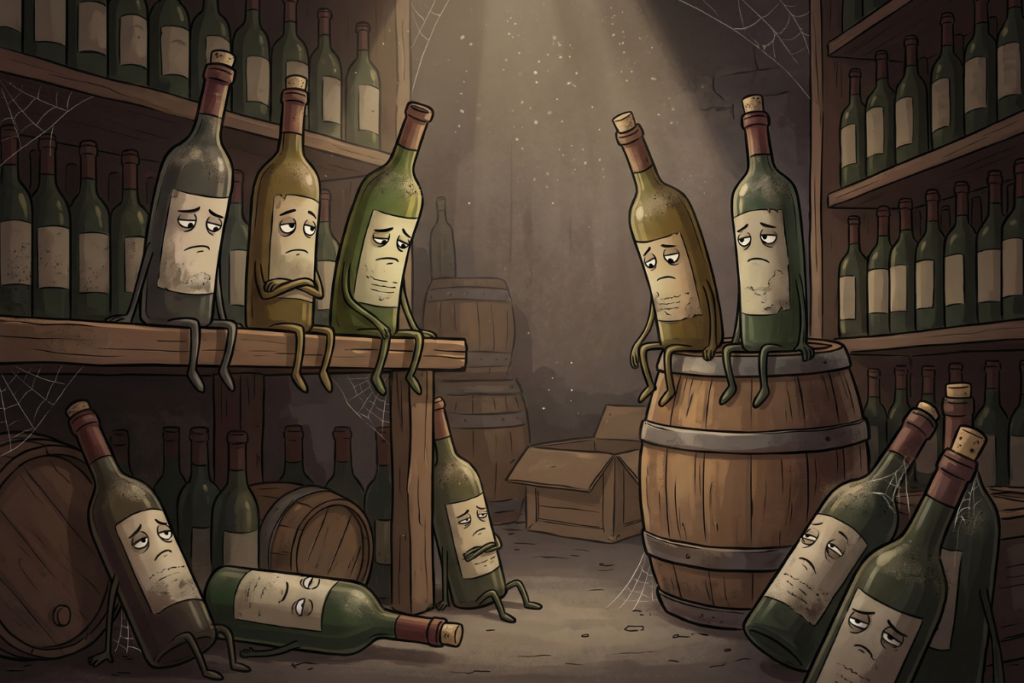
Proposing 15 uninterrupted minutes of verbal explanation on the foundation of the winery generates an almost palpable boredom. The winning strategy requires completely deconstructing the corporate narrative, alternating 90 seconds of targeted narration with a concrete action and closing with a final surprise.
Applying this concept means, for example, dividing the long family history into short narrative pills distributed in different places of the estate. You can tell an anecdote while walking through the rows of vines, reveal a technical detail in front of the barrels and reserve the triumphant conclusion for the moment of the toast, thus keeping curiosity always alive.
Key Points
- Immediate engagement is essential to capture the attention of digitally distracted tourists within three seconds.
- Sensory interactions must replace long monologues to transform passive listeners into active and enthusiastic explorers.
- Deconstructing the narrative into short narrative pills distributed throughout the estate keeps visitors’ curiosity continuously alive.
- Cross-generational distraction means both adults and youths require dynamic stimuli to counter digital entertainment habits.