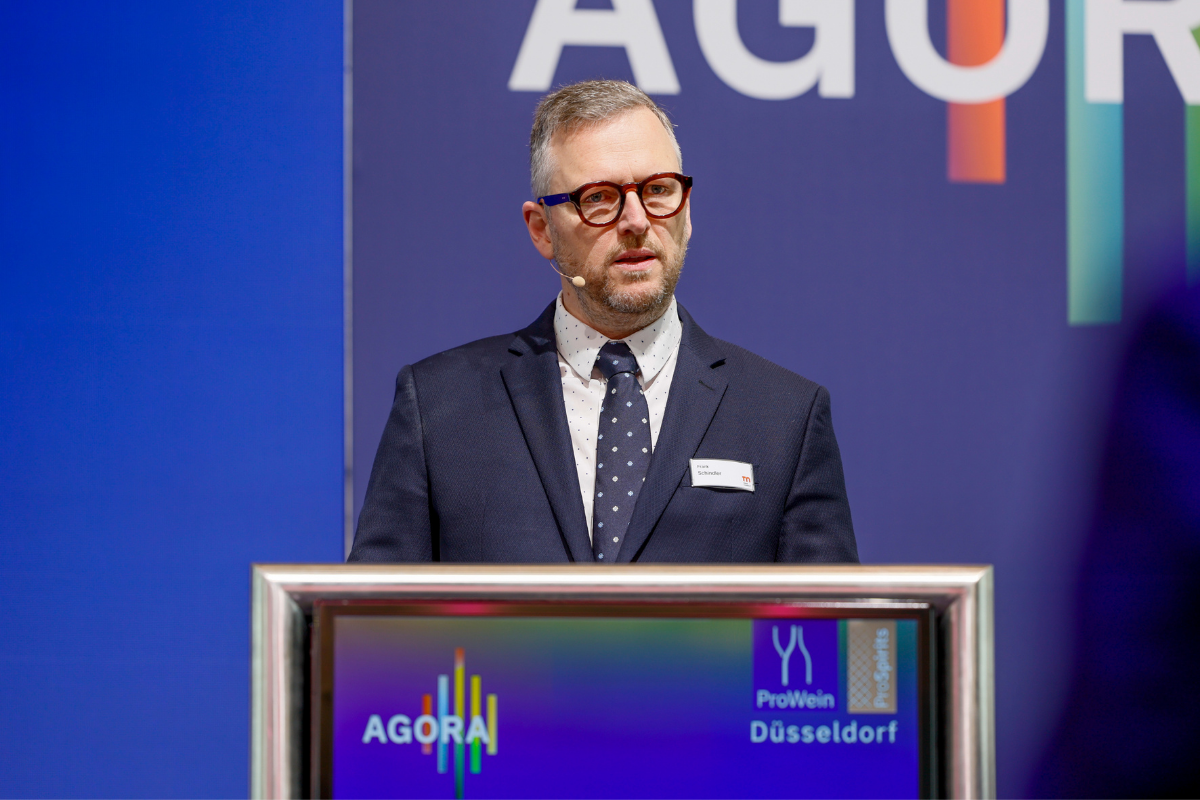
ProWein Düsseldorf is scaling back exhibitor numbers to sharpen its role in a shifting wine market. Director Frank Schindler explains why the fair caps participation at roughly 4,000 exhibitors, freezes 2027 pricing, and shifts focus toward buyers with real purchasing power instead of simple attendance figures, while launching new initiatives for young producers.
The wine trade fair landscape is changing rapidly. Rising costs, increasing competition between events and a more selective approach from exhibitors are forcing organizers to rethink their role. ProWein is responding with a strategy built around three pillars: More Focus, More Proximity and More Industry. We discussed with Frank Schindler, Director of ProWein Düsseldorf since October 2025, the reasoning behind this shift, the decision to cap exhibitor numbers and the role Düsseldorf intends to play in the future of the international wine business.
ProWein has deliberately chosen to limit the number of exhibitors and maintain a more compact format. In an industry where many trade fairs still associate growth with size, why did you decide to move in the opposite direction, and what did the 2026 edition teach you about the effectiveness of this approach?
ProWein has been growing like crazy during the last decades, but we see big changes in the wine market, and therefore the fair must change as well. We need to become a partner of our exhibitors and visitors to create fertile and successful business, not just providing space and room.
It was particularly important to me to ensure long-term stability for our visitors and exhibitors. This is one of the reasons why ProWein has introduced a cap of approximately 4.000 exhibitors not only for 2027 but also for the years ahead. The goal is to avoid overloading the infrastructure, maintain shorter walking distances and preserve the efficient and focused format that has always been one of ProWein’s strengths.
You describe ProWein 2027 as Europe’s leading trade fair for wines and spirits. Beyond the slogan, what does this positioning actually mean in practical terms for exhibitors and buyers, and how is it different from the role ProWein played just a few years ago?
ProWein is a really international wine fair, as only around 20% of the exhibitors are local. At the same time we represent a natural hub for all the upcoming Eastern European wines and producers. With the new positioning as Europe’s leading trade fair backed by international purchasing power, the location once again becomes an advantage.
Germany remains the world’s largest wine import market, while North Rhine-Westphalia hosts the highest concentration of wine merchants and importers in the country. The trade fair is practically located right next to Europe’s most important purchasing centers.
ProWein also understands its role as a trend scout and enabler. This is why the fair is launching the new Discovery Zone, designed as an affordable entry point for young, innovative and trend-setting producers looking to connect with international buyers and establish new business relationships.
The wine business is increasingly asking for quality contacts rather than large visitor numbers. To what extent has ProWein shifted its priorities from attracting more people to attracting the right people, and what evidence from the 2026 edition convinced you that this is the right direction?
With our Hosted Buyers Program we want to make sure that producers get in contact with exactly the target group they are looking for. While in the old times we just opened the doors, we now define quite specifically whom we really need to come to the fair.
Most important buyer markets apart from Germany are Benelux, Scandinavia, the UK, Eastern Europe, Asia, Africa and the US.
The strategy reflects a broader shift in ProWein’s priorities. Rather than focusing on overall attendance figures, the fair is concentrating on attracting buyers with real purchasing power and a clear commercial interest. The objective is to create ideal business opportunities for exhibitors and generate new orders and new revenue streams.
Wine trade fairs have always been major industry gatherings – a moment for exchange and a sense of community. In disruptive times, however, a trade fair must offer more than meetings with existing customers and good friends. It must specifically lead to new orders and new revenue streams.
The international wine market is becoming more selective, with companies paying closer attention to return on investment when choosing where to exhibit. How is ProWein adapting to this new reality, and what kind of international audience are you focusing on attracting in the coming years?
We invite our exhibitors to define which markets they are interested in, and we focus on these needs. Germans are known for clear directions and efficiency – elements that are heavily needed in the wine market. We will focus even more on our talents.
This market-oriented approach also explains why ProWein has decided not to introduce an inflation-related increase in exhibition prices for 2027. The cost per square metre will remain unchanged, maintaining accessibility for small and medium-sized producers while helping exhibitors maximise the return on their investment.
Beyond matchmaking, ProWein is expanding its role as a year-round industry platform through initiatives grouped under the ProWein Academy. These include the Agora conference format, Visionary Talks and the Masterclass Forum, all designed to provide market intelligence, strategic insights and professional education beyond the three days of the exhibition itself.
Germany remains among the world’s largest wine import markets. How does this market context reinforce ProWein’s strategic role, and why do you believe Düsseldorf is becoming even more relevant as a business hub for the international wine trade?
As an import market, we understand even better the needs of buyers and we will offer the perfect exhibitors and program to the German and international trade. This is our strongest Unique Selling Proposition, we can think out of the head of international buyers.
That ability to understand purchasing behaviour is central to ProWein’s future strategy. The fair is increasingly positioning itself as a platform built around demand rather than supply, using Germany’s role as the world’s largest wine import market as a competitive advantage.
At the same time, investments in accessibility and networking are reinforcing Düsseldorf’s attractiveness. The new U81 metro line will connect Düsseldorf Airport directly with the exhibition grounds from September 2026, while a dedicated agreement with Düsseldorf Tourism will make 400 hotel rooms available at a fixed rate during the event.We have listened very carefully to the industry over the past few months and understand what businesses currently need most. These are challenging times for the wine industry, but I am confident that ProWein is a strong long-term partner for all participants, and not just during the trade fair itself, but throughout the year.
Key points
- Exhibitor cap locks in around 4,000 spots to protect walking distances and long-term stability.
- Discovery Zone launches as an affordable entry point for young, trend-setting wine producers seeking global buyers.
- Hosted Buyers Program targets Benelux, Scandinavia, the UK, Eastern Europe, Asia, Africa and the US specifically.
- Prices stay flat for 2027, keeping costs per square metre unchanged for small and medium producers.
- New U81 metro line links Düsseldorf Airport to the fairgrounds starting September 2026, easing access.