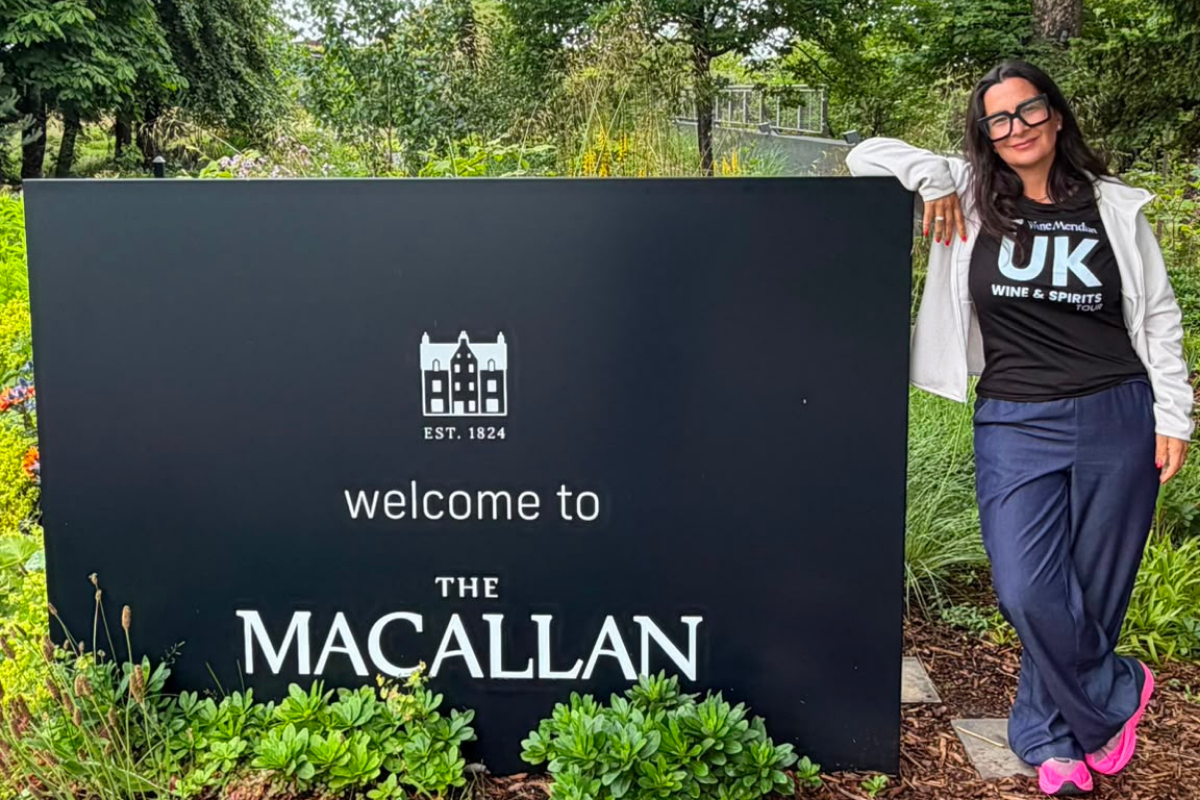
Deep in Speyside, Macallan built a distillery that turns visitors into people who deeply want to get in, using mandatory bookings, tiered experiences, trained brand ambassadors, and exclusive bottles only available on site. This turns a simple visit into a luxury ritual, offering a model Italian wineries can also learn from despite their much smaller budgets.
In the Speyside countryside, above the River Spey, there is a building that no one would call a distillery at first sight. Five grassy domes rise from the ground like artificial hills. The roof is covered with Scottish wildflowers. Below, a curved wooden lattice supports a concrete and glass structure without columns. It opened in 2018. It won the RIBA National Award in 2019 and numerous other international awards. It houses the Macallan distillery, and it was not designed to be visited: it was designed to be desired.
Two hundred years to reach this point
The story begins in 1824, and for over a century, Macallan remained a mid sized distillery, appreciated mainly by large industrial blenders who bought its whisky to use in their blends. Management made a contrarian bet in the 1980s: to stop selling its whisky to blenders and focus solely on single malt.
Thirty years later, that bet had produced one of the most highly valued brands in the world. A 1926 Macallan bottle, sold at auction in 2023, fetched over two million pounds. But the real strategic leap is not in the auctions, it is in having understood that a luxury product, to remain one, needs a temple.
The first filter: mandatory booking
The most immediate lesson of the Macallan model begins even before entering. You cannot arrive at the distillery and buy a ticket on the spot. Every single access, even just to the shop, requires an online booking. It is not arrogance: it is positioning.
The implicit message of this choice is clear. Visiting time at Macallan is a scarce resource, not an available service. Whoever wants that time must plan it, book it, earn it. This simple filter turns the casual visitor into an intentional one, and radically changes the psychological disposition of those who arrive. You do not enter out of curiosity: you enter because you wanted to enter.
The second filter: tiered experiences
Once booked, the visitor must choose the level of experience. Macallan does not offer “the tour.” It offers a structured range of experiences with rising prices and differentiated content. The Private Experiences, available on request, start from 2,000 pounds and up, and are tailored to small VIP groups with fully personalized tours.
Staff as invisible infrastructure
The people who lead Macallan’s experiences are brand ambassadors trained with specific backgrounds in luxury marketing, premium hospitality, and technical whisky knowledge. Many hold the WSET Whisky Diploma, the industry’s highest certification. Some previously worked in five star hotels, luxury jewelers, and fashion ateliers.
The level of customer attention is deliberately that of a five star hotel: names remembered throughout the visit, a personalized welcome at the entrance, follow up after the visit. No visitor is anonymous, no one is a number.
Bottles you can only buy here
The most refined commercial element of the Macallan model is the Distillery Exclusive. These are bottles filled directly from the stills at Easter Elchies, available only at the distillery shop.
The commercial effect of this choice is powerful. The visitor who buys a Distillery Exclusive does not just buy a bottle, they buy proof of having been there. It is the ultimate luxury souvenir. And it costs 200 to 400 pounds, with very high margins for the producer.
What Italian wine can learn, what it cannot copy
The Macallan model cannot be fully replicated. The financial investment is in the hundreds of millions, and the brand’s scale supports operations that very few producers in the world can afford. But the strategic levers are transferable even on a much smaller scale.
Mandatory booking as a positioning filter: this applies to any winery. The layering of experiences into distinct tiers: this applies to any winery. It is enough to imagine three different paths with rising prices and differentiated content. The visitor who chooses the basic level knows that a premium level exists, and that residual desire is already an asset.
Hospitality training for staff: this is the most underrated investment. A trained brand ambassador is worth ten technical operators. Knowing the wine is not enough; one must know how to tell its story the way a novel is told.
Exclusive bottles sold only at the winery: an extremely powerful narrative lever. It ties the purchase to the physical visit. It turns the trip into part of the product. Carefully curated visual positioning: a building costing one hundred forty million is not necessary. What is needed is a coherent environment, cared for in every detail, where every object and every light says something about the brand. Changing the perception of the same space with small scenographic investments can radically change the experience.
Key points
- Mandatory booking turns casual visitors into intentional guests who value their time at Macallan.
- Tiered experiences create rising desire, since choosing the basic level reveals higher levels exist.
- Trained brand ambassadors replace technical guides, delivering five star hospitality throughout every visit.
- Exclusive bottles sold only on site turn the trip itself into part of the product.
- Curated visual design relies on coherence and detail, achievable even with modest investment.