I’ve followed Gorghi Tondi for many years. Every time I return to this winery, one conviction grows stronger: it stands among the finest interpreters of Sicilian winemaking, and it remains one of the rare estates that keeps experimenting relentlessly, both in production and in communication, two worlds that still struggle to speak to each other in Italian wine.
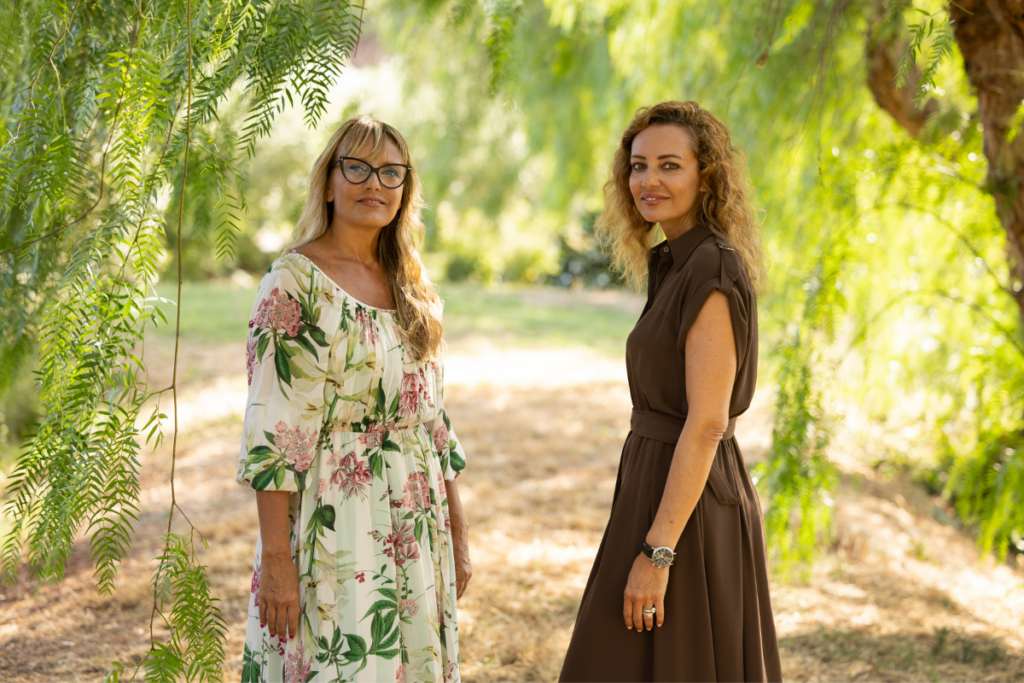
Annamaria and Clara Sala inherited the estate from their father Michele, who passed away some years ago, and they chose to grow it rather than simply preserve it. Working alongside them is Tonino Guzzo, whom I consider one of Sicily’s finest winemakers, and together they run an estate that consistently delivers. Every label seems to emerge from a precise reading of the land’s character, an extreme corner of western Sicily, where the winery and vineyards sit between Mazara del Vallo and Marsala, inside the Lago Preola e Gorghi Tondi Nature Reserve, one of Italy’s most striking WWF oases. This setting shapes the viticulture in real terms, sitting just a few hundred meters from the sea at twenty-five meters above sea level, with organic certification held since 2016.
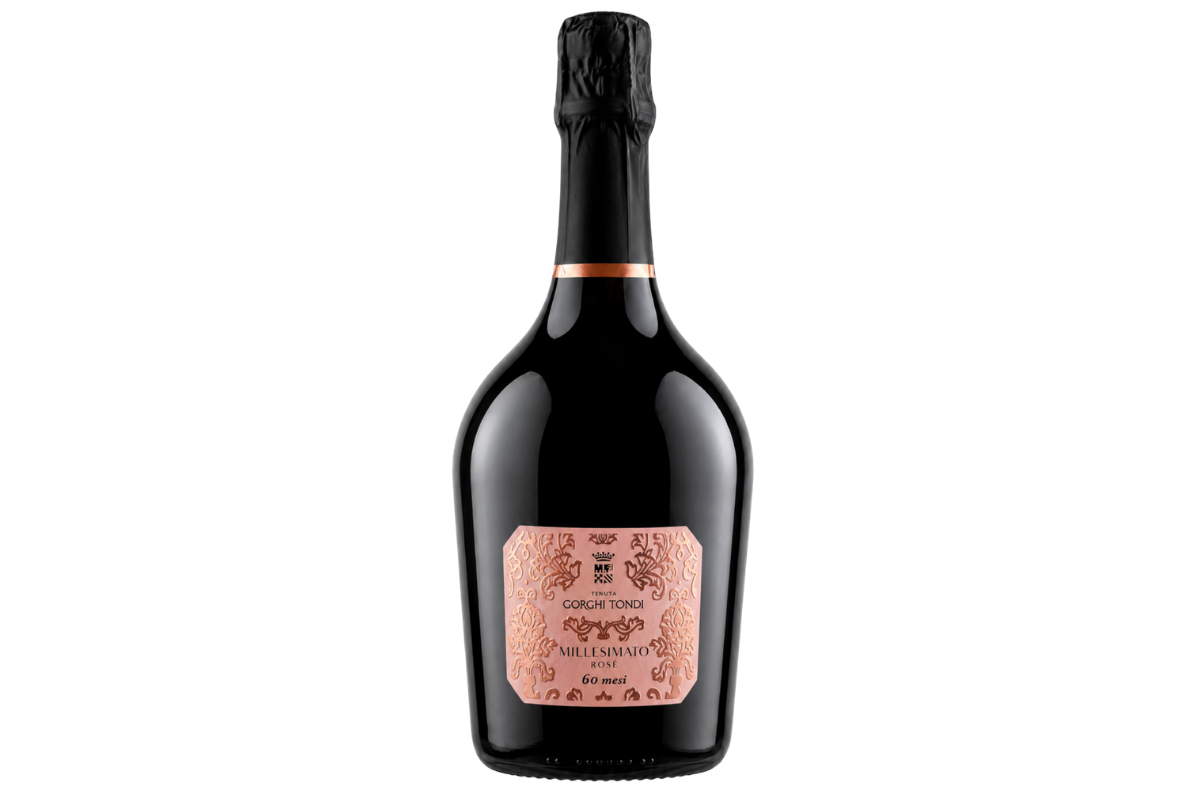
Gorghi Tondi’s Metodo Classico project carries Michele Sala’s name. Years ago, he challenged Guzzo with an idea many would have called unlikely: to grow and vinify Pinot Noir right there, in the countryside near Mazara. The Millésime Rosé Brut Nature 2020, aged 60 months, represents the most accomplished result of that challenge.
Here lies the point I find genuinely significant, one that extends well beyond this single bottle: this wine proves that a great metodo classico can come from land that, on paper, seems unsuited to producing exceptional sparkling wine grapes. I write this with full confidence and zero flattery toward the estate, Gorghi Tondi’s rosé metodo classico has been my most exciting discovery among fine sparkling wines this scorching summer of 2026.
For those who love the details: single-vineyard, single-vintage Pinot Noir, harvested by hand in crates in early August. The base wine ages for eight months, partly in steel and around 35% in new French oak barriques. Then comes the second fermentation and five years on the lees before disgorgement. Seven hundred bottles were set aside from the first edition, presented in 2024, to extend the aging further. Dosage: zero, one gram per liter. This wine relies entirely on its own strength.
The color is a pale, almost transparent pink, onion skin, antique gold, call it what you like, with a fine, persistent perlage. On the nose, finesse takes the lead: small red berries, a touch of pomegranate, citrus zest, a floral note, and that iodine-tinged signature typical of this place. In the background, the five years on the lees make their presence felt with subtlety.
This is exactly what struck me. Sixty months on the lees added elegance and finesse rather than weight, and the wine kept every bit of its drinkability. The palate is taut and linear, carried by an acidity that holds the structure together, closing dry, saline, and long. It offers an extraordinary blend of elegance, freshness, and fragrance, which explains why a bottle from a run of just seven hundred disappears far too quickly.
We paired it with an excellent crab tartare, and the match proved perfect. The sweetness of the crab and the wine’s saline drive played off each other beautifully throughout the dish, each element holding its own without overpowering the other.
Company profile
Gorghi Tondi estate would never have come to life without the enduring love for nature of Dora, the great-grandmother of Annamaria and Clara Sala. Representing the fourth female generation in a family that has been dedicated to quality wine production for over a century, Annamaria and Clara carry forward a commitment that blends tradition with respect for the environment. The journey of Gorghi Tondi as a winery began in 2000, when Michele Sala, their father, decided—after more than forty years in the wine industry—to establish his own venture together with his wife Doretta and their two daughters. The deep connection with the land, especially with the nearby High, Middle, and Low whirlpools (the “Gorghi”), also inspired the winery’s name. This oasis, protected by the WWF since 1998, is a natural sanctuary for diverse wildlife and rare flora, a place where nature thrives alongside the vineyards. Here, the family’s approach to viticulture blends seamlessly with the surrounding environment. On a vineyard that
GORGHI TONDI
C.da San Nicola, 91026 – Mazara del Vallo (TP)
+39 351 0930988 – info@gorghitondi.it
https://gorghitondi.it