Since many people ask me whether I use artificial intelligence for my articles, I felt it appropriate to answer all our readers, also because this allows me to give my point of view on a topic as extremely complex as AI. First of all, I should say upfront that my use of AI is “limited” to exploring sources, that is, to verifying, also through some artificial intelligence tools, in addition to search engines, the many possible sources from which to draw information, data, and also prompts for reflection.
Dwelling for a moment on this premise, it should be underlined that today AI, in all its different forms, has expanded the pool of sources in an impressive way, and this often also represents a problem in selecting what is authoritative and credible from what is not. But there is another problem triggered by AI, which I call “editorial bulimia,” the result of many people who, thanks to it, found themselves overnight able to write seemingly authoritative thoughts.
Unfortunately, however, we almost always confuse the ability to write in Italian, with correct syntax (AI is excellent at this), with authority, with competence. And this is exactly where the so-called donkey trips up. I am trying to make myself understood so as to avoid coming across as the usual know-it-all who wants to give everyone lessons.
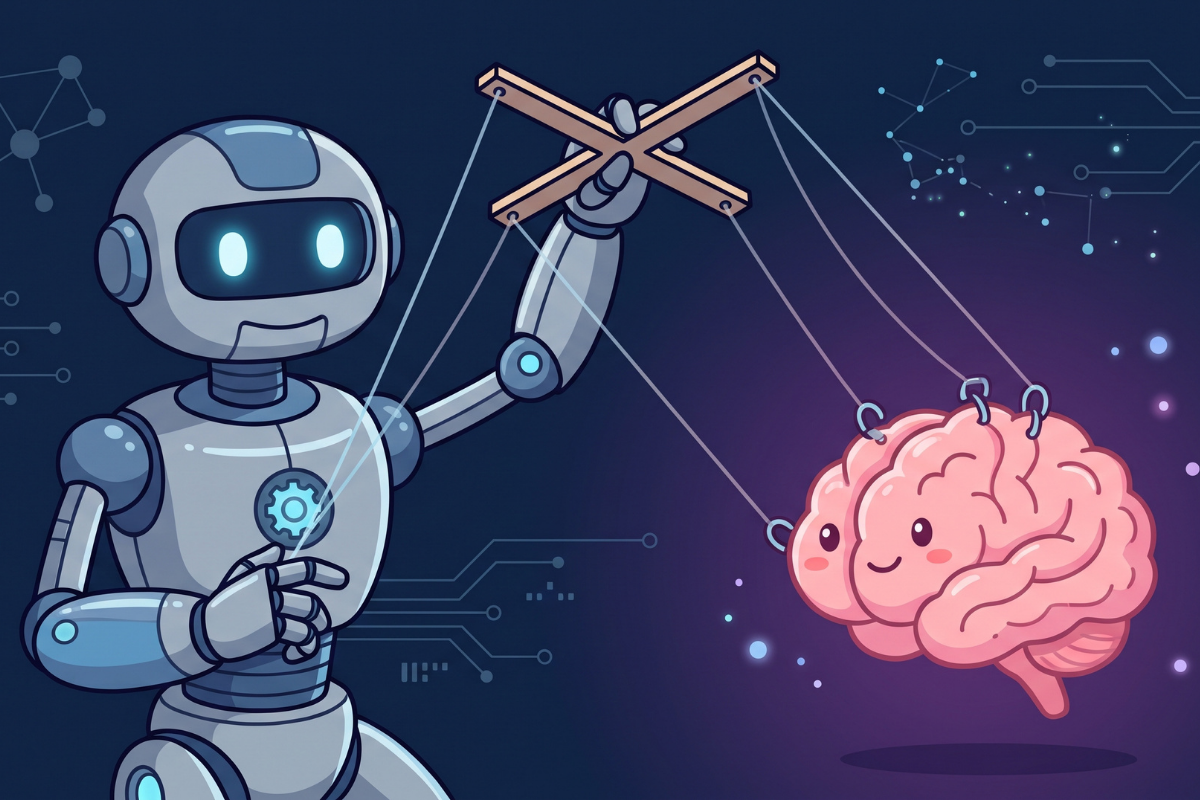
AI is a dangerous beast, and the ever more numerous people who now use it every day know this very well, because it is an extraordinary feeder of illusions. The first of these illusions is making you believe, after a while, that what AI writes is nonetheless the product of your own thinking, and therefore “all your stuff.”
Rubbish, AI always goes beyond your thoughts, overtakes them, enriches them, modifies them so that they seem even better than your own. At first you remain a little perplexed, but then you tell yourself: “wow, finally someone who understands me completely, who only needs me to say a couple of things and immediately knows how to interpret me at best.”
This last deception is decidedly the most dangerous, the one that makes you regress in a frightening way, giving you the illusion that the two bits of knowledge you had will be enough for you for eternity because AI will always be there to enrich them.
Just read the LinkedIn posts of these last years to realize that everyone has become a specialist in everything. Balance sheet analysts, wine experts, political scientists, economists on everything, in short, if an alien read them and knew nothing about AI, he would believe he had landed on a planet extremely rich in competences, full of experts on the whole of knowledge. And this is precisely the editorial bulimia that feeds a river of illusions of competence which unfortunately inevitably risks leading us to a tsunami of dangerous ignorance.
Nobody is immune to this risk, starting with those, like me, who after almost forty years in the wine world believe they have enough experience and competence to hold their own against AI and to feed it with their learned wisdom without being overwhelmed by it. I write this because I have challenged it in recent years, always coming out the loser,like when I tried to beat my computer at chess.
If therefore we still have a glimmer of common sense, we must use it, with care and parsimony, only when it can truly represent added value, but without it being the one to guide us. Without forgetting that our neurons, our synapses, are activated and kept alive only through constant exercise, like our muscles, which if we do not stimulate them with movement are annihilated dramatically.
For this reason, the very exercise of writing, by activating one’s brain, even to write a post or a simple email, is a fundamental form of psychic and intellectual evolution without which one inevitably regresses. For that reason I increasingly perceive that AI, in a phase of such profound transformations, is preventing us from doing something fundamental: studying, analyzing phenomena in order to face them in the best way.
Instead we rely on it for answers and therefore we risk becoming extinct with a “perfect Italian,” but unfortunately even that is not “flour from our own sack,” as my dear elementary school teacher would have said.
Key points
- Editorial bulimia describes the flood of AI-generated content that makes people feel like experts overnight.
- Fluent writing comes easily to AI, while authority and competence require real knowledge.
- AI enriches your ideas so convincingly that you may believe the result is entirely your own thinking.
- Use AI sparingly and only when it adds value, keeping yourself in the lead.
- Write regularly to keep your neurons and intellectual abilities active, like muscles through exercise.