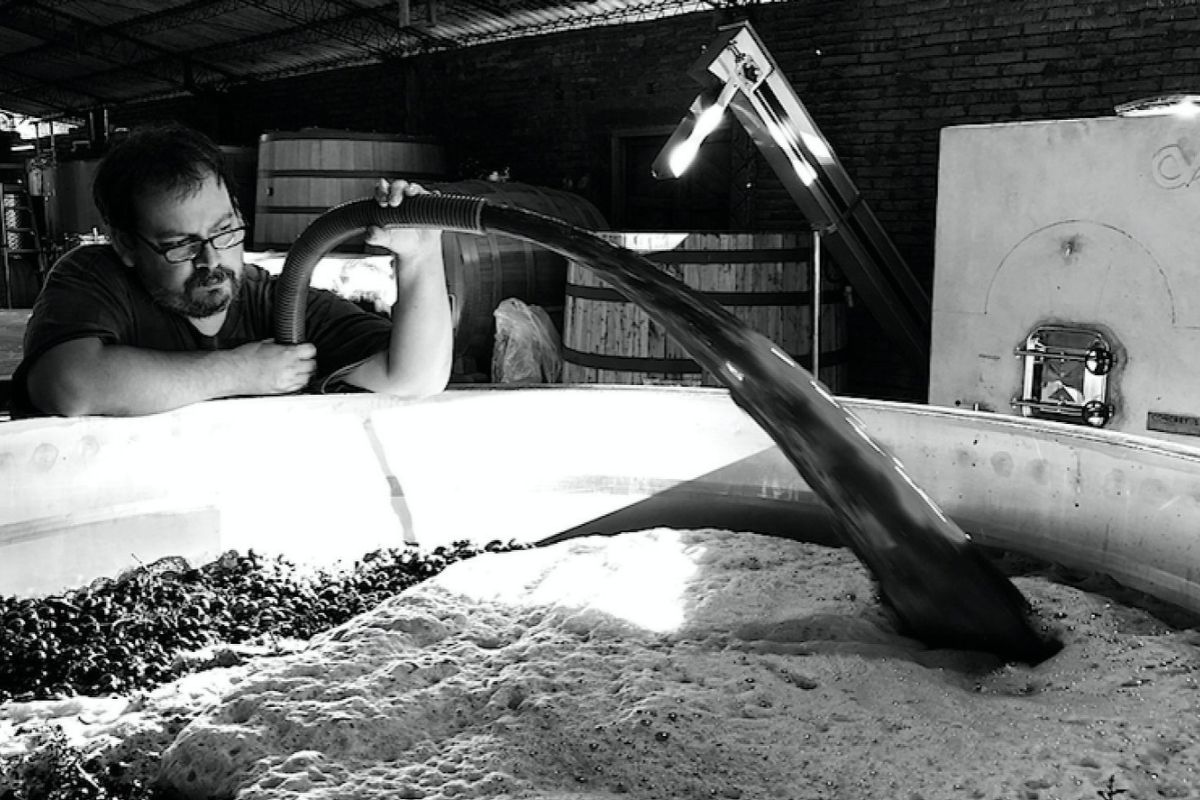
“We need to replant Burgundy, the system no longer works.” The provocation comes from Pedro Parra, one of the leading experts on terroir, who at a recent event in London, reported by Peter Dean on The Buyer (Pedro Parra: We need to replant Burgundy, the system isn’t working), raised the alarm about the future of the great wine regions, from Burgundy to Montalcino. Climate change is said to be altering growing conditions so profoundly as to compromise not only traditional production models, but also the very identity of the wines.
An analysis that is hard to dispute in its premises. Denying the effects of climate change on viticulture would be absurd. Rising temperatures, drought, extreme events and new balances in grape ripening are changing the vineyards and, inevitably, the wines that come from them. But it is precisely from this awareness that some questions arise.
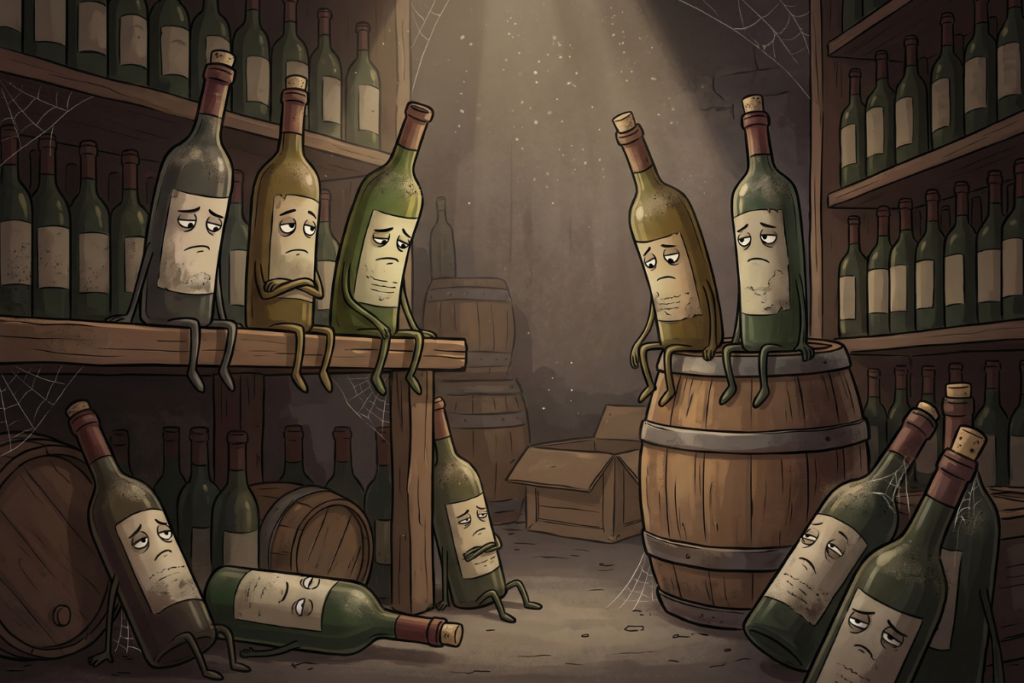
Are we truly sure that today’s great wines are worse than those of the past? That a riper, more structured and more alcoholic Pinot Noir is necessarily qualitatively inferior to the lighter, more elegant one we knew and loved a few decades ago? Not comparable does not necessarily mean worse. And the risk is to turn a stylistic model, perhaps legitimately preferred, into an absolute parameter of quality.
Not to mention that even the wines now considered classic expressions of their respective territories are the result of a historical, agronomic and oenological evolution that is anything but static. Certainly, excessive ripeness and concentration can compromise balance, freshness and drinkability. But neither can we automatically establish that the wine of the past was better simply because it differs from the contemporary one.
Yet there is another aspect of Parra’s reflections that struck me, perhaps even more than the provocation about replanting. His surprising return to the concept of typicity. The very typicity that for decades dominated wine communication, popularization and criticism, only to gradually lose centrality, until it almost disappeared from the language with which we talk about wine today.
For years we judged wines also by their ability to represent a recognizable territorial model. Then we began, rightly, to value more and more the interpretive freedom of the producer, their choices, their sensibility. We celebrated the infinite nuances of terroir, the differences between single parcels, between neighboring vineyards and even between portions of the same vineyard. From the pursuit of typicity we moved to the celebration of diversity.
And now Parra himself, one of the most authoritative scholars of those differences, returns to invoke typicity as a heritage that climate change risks erasing. I confess that this intrigues me. But which typicity are we talking about, Pedro? The one codified by critics through more or less shared stylistic models? The one that should allow us to recognize a territory regardless of the producer’s hand? Or a deeper territorial identity, able to manifest itself through different interpretations?
Because, if even before climate change reached its current evidence we had progressively scaled back the concept of typicity, resurrecting it now to denounce the transformation of wines seems questionable, to say the least. And above all: who decides what is the authentic expression of a territory? And to which moment of its history should we refer?
Perhaps we should distinguish typicity, understood as fidelity to a given stylistic model, from territorial identity, which can evolve without necessarily disappearing. Because the real risk is not that tomorrow’s wines will be different from yesterday’s. It is that, as a result of climate change and inadequate production practices, they will end up increasingly similar to one another. And then we would indeed lose something fundamental: the extraordinary diversity that is one of wine’s greatest riches.
It is on this ground that Parra’s provocation becomes fully agreeable again. We cannot think of facing such profound climate transformations by merely bringing harvests forward or making a few corrections in the cellar. The problem affects the entire production system: rootstocks selected under different climatic conditions, root systems that are not always adequate, management of soil and water resources, training systems, up to oenological techniques developed to concentrate grapes that today, often, have no need of further concentration.
We must study, experiment, and come to know ever better what happens in the vineyards, including beneath the surface, and have the courage to question practices considered untouchable. Including, where necessary, the advisability of replanting with plant material better suited to the new conditions. Because tradition cannot become immobility and, paradoxically, to preserve the identity of a wine it might be necessary to profoundly change the way we produce it.
It remains essential, however, not to confuse different matters: the quality of the wines we produce today, their resemblance to those of the past and the sustainability of the production models that will have to guarantee the wines of tomorrow. We can fully acknowledge the gravity of the climate crisis without turning every stylistic change into a verdict of qualitative decay. And we can defend the identity of territories without demanding that their wines remain forever identical to an image that, perhaps, exists mostly in our memory.
Parra’s most valuable contribution is that of forcing us to look ahead, instead of continuing to seek solutions to new problems with tools designed for a world that no longer exists. As for typicity, however, one question remains for me. If we had almost accompanied it to the door even when the climate was less unpredictable, are we really sure it is appropriate to call it back today to defend the wines of yesterday?
I would truly like to discuss it with Pedro Parra. But then, after all, who am I to question the great Pedro?
Key points
- Climate change is reshaping vineyards and wines, calling for a rethink of established production models.
- Different wines can match the quality of past ones; stylistic preference should stay separate from absolute quality.
- Typicity differs from territorial identity, which can evolve through varied interpretations.
- Growing similarity among wines is the real risk, threatening the diversity that makes wine so rich.
- Rootstocks, soil, water and training systems deserve study, including replanting with better suited plant material.