The 2026 national survey of Italian wine tourism hospitality managers, presented at Vinitaly Tourism, reveals a sector with strong demand potential but significant structural challenges. Attracting visitors to wineries, achieving consistent profitability, and overcoming systemic obstacles – fragmentation, poor territorial collaboration, and limited marketing infrastructure – are the priorities identified by the over 850 professionals who make up the Club Hospitality Manager of Wine Meridian.
Italian wine tourism does not need more rhetoric, but more method: a stronger culture of data, greater attention to profitability, deeper integration between wineries, hospitality providers, institutions and territories, and more targeted investment in marketing, people and processes. In a word, a more shared vision.
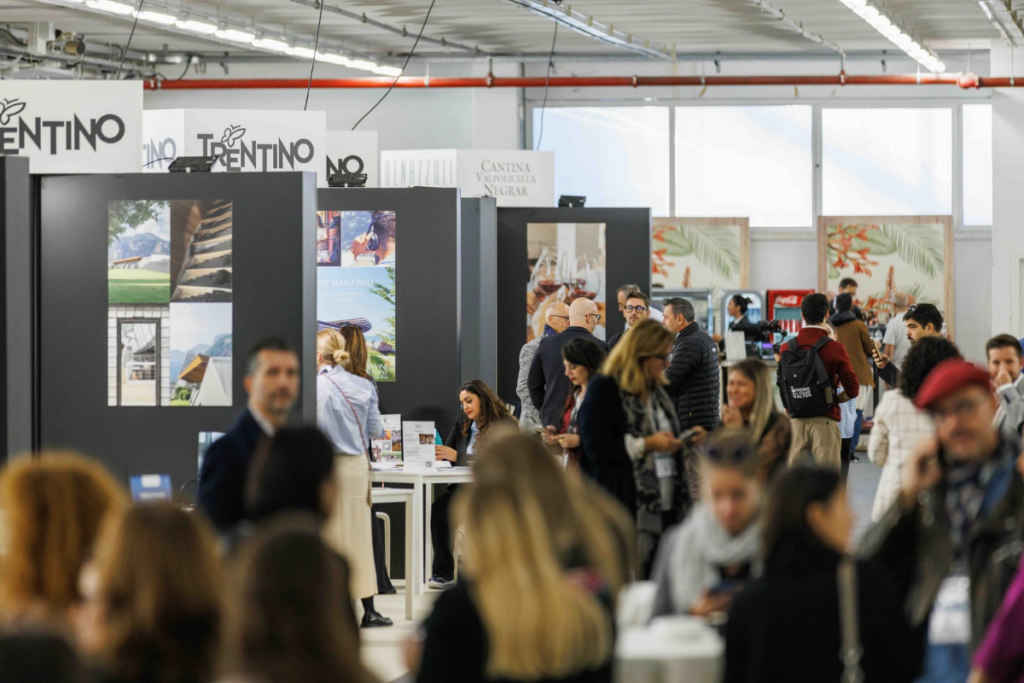
This, in summary, is the picture that emerges from the 2026 national survey dedicated to Italian hospitality managers, presented at Vinitaly Tourism 2026, the area of the Verona trade fair that this year hosted a rich programme of conferences and meetings with wine tourism at the centre of the debate.
One element makes this survey particularly relevant: it does not gather the perspective of external observers, but of those who experience winery hospitality as a daily practice. The survey was built by listening to the hospitality managers who are part of the Club Hospitality Manager of Wine Meridian, a community of over 850 members that aspires to become the voice of those who, every day, welcome people into their estates, manage visits, tastings, relationships and often the commercial conversion of the wine tourism experience.
In this sense, the value of the research lies precisely in its concrete nature: it speaks from those who build wine tourism every day, not those who merely observe it from the outside.
The first striking finding concerns the nature of the challenge itself. For those working in hospitality, the main difficulty is attracting tourists to the winery in the first place, not simply improving the welcome once they arrive. This was the most frequently cited response, ahead of other important issues such as sustainable sales, the lack of qualified staff, day-to-day operations, or the difficulty of making hospitality a truly profitable function.
This represents a significant shift in perspective: the challenge is building consistent, qualified flows of demand. The challenge, therefore, is commercial before it is narrative.
Alongside this difficulty in capturing demand, a second equally critical issue emerges: economic sustainability. Hospitality generates relationships, reputation and direct contact with the consumer, and in many cases, also sales. But this alone does not always make hospitality a fully mature business unit.
The survey highlights that direct post-visit sales carry significant weight in hospitality revenue, yet for many estates it is still insufficient to establish wine tourism as a fully autonomous and structured margin driver. The question, then, is how consistently hospitality can translate into structured profitability.
When the view broadens beyond the individual winery, perhaps the most important finding of the entire survey comes into focus: the strongest obstacles to wine tourism growth are systemic and external, rather than internal to the wineries themselves.
The most cited difficulties concern financial resources, lack of collaboration with local bodies, bureaucracy and a shortage of specific competencies. Even more telling is the assessment of the single greatest constraint on wine tourism growth in Italy, where terms such as fragmentation, infrastructure and national marketing come to the fore. The message is clear: the challenge lies within the system, not the product. Italian wine is exceptionally strong across its territories, but too often still weak as an integrated destination.
Also revealing is the judgement expressed on the support perceived from consortia and territorial bodies in promotional activities. More than half of the responses clustered around low scores, a signal of a widespread sense of operational isolation.
Hospitality managers do not appear to be asking for extraordinary interventions or sweeping campaigns: they are asking not to be left alone. They are asking for a system that supports them with greater consistency, vision and connectivity.
The survey’s conclusions effectively summarise the picture: Italian wine tourism has significant demand potential, but struggles to capture it in a stable way; hospitality is increasingly central, yet is not always treated as a genuine business; without territorial collaboration, infrastructure and shared strategy, that potential remains unfulfilled.
This is a diagnosis the sector would do well to treat as a starting point, not as a grievance. The real challenge today is organising to make wine tourism truly work, not convincing the market of its value. The market has already understood that. This is one of the arenas where a significant part of Italian wine’s competitiveness will be shaped in the years ahead.
Key points
- The main challenge for hospitality managers is attracting visitors to wineries, before improving the experience itself.
- Hospitality drives direct sales and reputation, but structured profitability remains elusive for many estates.
- The biggest obstacles to growth are systemic: fragmentation, bureaucracy, and weak national marketing infrastructure.
- Support from consortia and territorial bodies is widely rated as insufficient, creating a sense of operational isolation.
- Italian wine tourism needs shared strategy, integrated infrastructure, and cross-sector collaboration to fulfil its potential.