The wine world has long mistaken complexity for value. Today’s consumers, less educated on wine, more overwhelmed by daily life, seek simplicity, immediate pleasure, and bold packaging. The real challenge for producers is to stop making wines that require study and start crafting bottles people simply want to open.
I have always considered myself an average consumer and, although I have been involved in the wine supply chain for about 35 years, I do not consider myself a wine expert in terms of the product itself. It has always been the economics and marketing of wine that attracted me, while on the product side – despite having inevitably learned a great deal over time (from agronomic to oenological aspects) – I have always kept my distance from purely technical topics.
This “limitation” has allowed me to empathise with all those who know nothing about wine, those who simply say: I like it or I don’t.
For years and years I wondered whether this race to become sommeliers was a bubble, or whether it genuinely responded to a need rooted in human nature.
Recent consumption trends point to an uncomfortable truth: the collective rush to become sommeliers was probably not a deep-seated need, but a long-running industry trend. And like all trends, when it passes, it leaves a bill to pay.
This trend is now, let’s face it, in deep decline – and we could almost say that a reverse process is underway: a retreat from anything that appears complicated.
Some might argue that we have moved from the “liquid society” – as Polish sociologist Zygmunt Bauman defined it – to a “superficial” one. If Bauman described the contemporary era as a phase in which social bonds, institutions and values have weakened, becoming unstable and precarious like liquids that hold no shape, in the “superficial” society everything that appears complex, worth studying and exploring is now viewed with suspicion.
I am not a sociologist, so I won’t venture explanations for what has brought about this “superficial society.” I simply and “superficially” note that in an era full of conflicts, problems and uncertainties, very few people want to burden themselves with understanding the “deeper” values of wine.
But if this streetside-sociologist assessment of mine were true, it means that when we talk about a new language of wine, about new communication models for wine, we should be imagining something absolutely simple, superficial, and possibly original.
So, trying to think like an “average” consumer – not “educated” on wine – what makes wine attractive to someone like me?
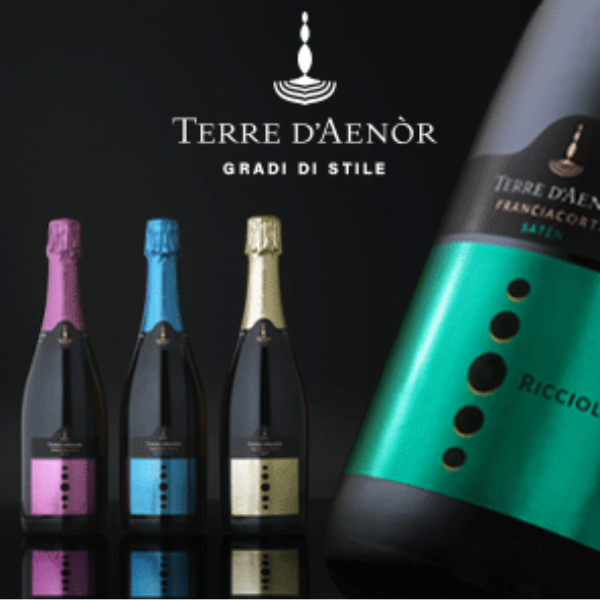
First of all, packaging. And on that note, this year too I had the privilege and good fortune of being part of the Vinitaly Design Award. I went back to look at the packaging (labels, bottle formats, product lines, etc.) to which I gave the highest scores, and I could describe them with two adjectives: original and transgressive.
Original because they reminded me of nothing I had seen before, and transgressive because they stood well apart from the classic image of a wine bottle.
At that point – no longer as an average consumer but as a careful market observer – I asked myself: how many wine bottles I come across every day actually wear an original and/or transgressive look? Very few.
Then I went back to being an average consumer and asked myself what gustatory characteristics make me appreciate a wine. And here too, two adjectives immediately come to mind: soft and fruity, in the right balance, to guarantee a pleasant and enjoyable drinkability.
Does this mean I dislike so-called complex wines? There are obviously complex wines that do not match the two adjectives above and that I am nonetheless able to appreciate, but to do so I have to make an “academic” effort, opening the drawer in my brain labelled “viticultural and oenological expertise.”
The problem is not complexity itself. The problem is when complexity becomes an alibi, a noble justification for covering up wines that are unwelcoming, hard to understand, and sometimes simply unpleasant.
On this last point, a conversation I had at Vinitaly a few days ago comes to mind. A colleague explained to me how, when his friends, non-wine-experts, come to dinner at his place, he knows perfectly well which wines they will enjoy and which ones he avoids offering, because he knows they simply won’t be appreciated.
“If I served the wines I like,” he told me plainly, “I’d end up drinking them alone.”
Clearer than that, you can’t get.
But then another spontaneous question arises: if the majority of current, and prospective, consumers seek simplicity and immediacy in wines, how many wines actually have these characteristics? Not many, and while I obviously have no reliable statistical data, I would venture to say: a minority.
I won’t go deep into the topic of “contemporary” wines – those that today can hold meaning and interest beyond scattered niches – but it is undeniable that part of the current disaffection toward wine also depends on the very characteristics of many of our oenological offerings.
Continuing to avoid asking whether we are producing something that consumers actually want means burying our heads in the sand.
Continuing to dress our wines – regardless of the target they aim to reach, perhaps even trying to attract new consumers – in the same old outfit, never daring to use new imagery, strikes me today as yet another refusal to accept change.
Does this mean everyone in the wine world must become transgressive? We don’t all need to become transgressive. But we do need to stop being reassuring only to ourselves. Because a wine that takes no risks in language, image or taste risks the fate of certain drawing rooms: impeccable, cultured, and increasingly empty.
And the market, when it gets bored, does not forgive.
Key points
- The sommelier trend is fading: most consumers now prefer simple, immediate wine experiences over technical knowledge.
- Packaging is a decisive factor, original and transgressive labels attract the average consumer far more effectively.
- Soft, fruity, and drinkable wines appeal to the majority; complexity works only for a trained minority.
- Complexity becomes a problem when used as an alibi to justify wines that are unwelcoming or unpleasant.
- Producers who avoid asking whether their wines meet consumer needs risk growing irrelevance in a changing market.